🗿 The Island of Giant Stones
For grown-ups: what this story teaches
This true historical story from Micronesia perfectly illustrates the economic concept of the "stock-to-flow ratio," which is the most reliable indicator of a good’s hardness as money. The "stock" is the existing supply of money, and the "flow" is the new extra production. Historically, Rai stones had a very high stock-to-flow ratio because quarrying them from neighboring islands and transporting them by canoe was painstakingly difficult. When Captain David O’Keefe introduced modern explosives and ships in 1871, he drastically lowered the stock-to-flow ratio, flooding the island with easily produced stones. The chief's refusal to accept O'Keefe's stones demonstrates an innate understanding of the "easy money trap": if a monetary medium is easy to produce, the producers will inflate the supply and expropriate the wealth of the savers. Bitcoin solves this through its difficulty adjustment, ensuring that its stock-to-flow ratio remains high and its supply strictly capped.
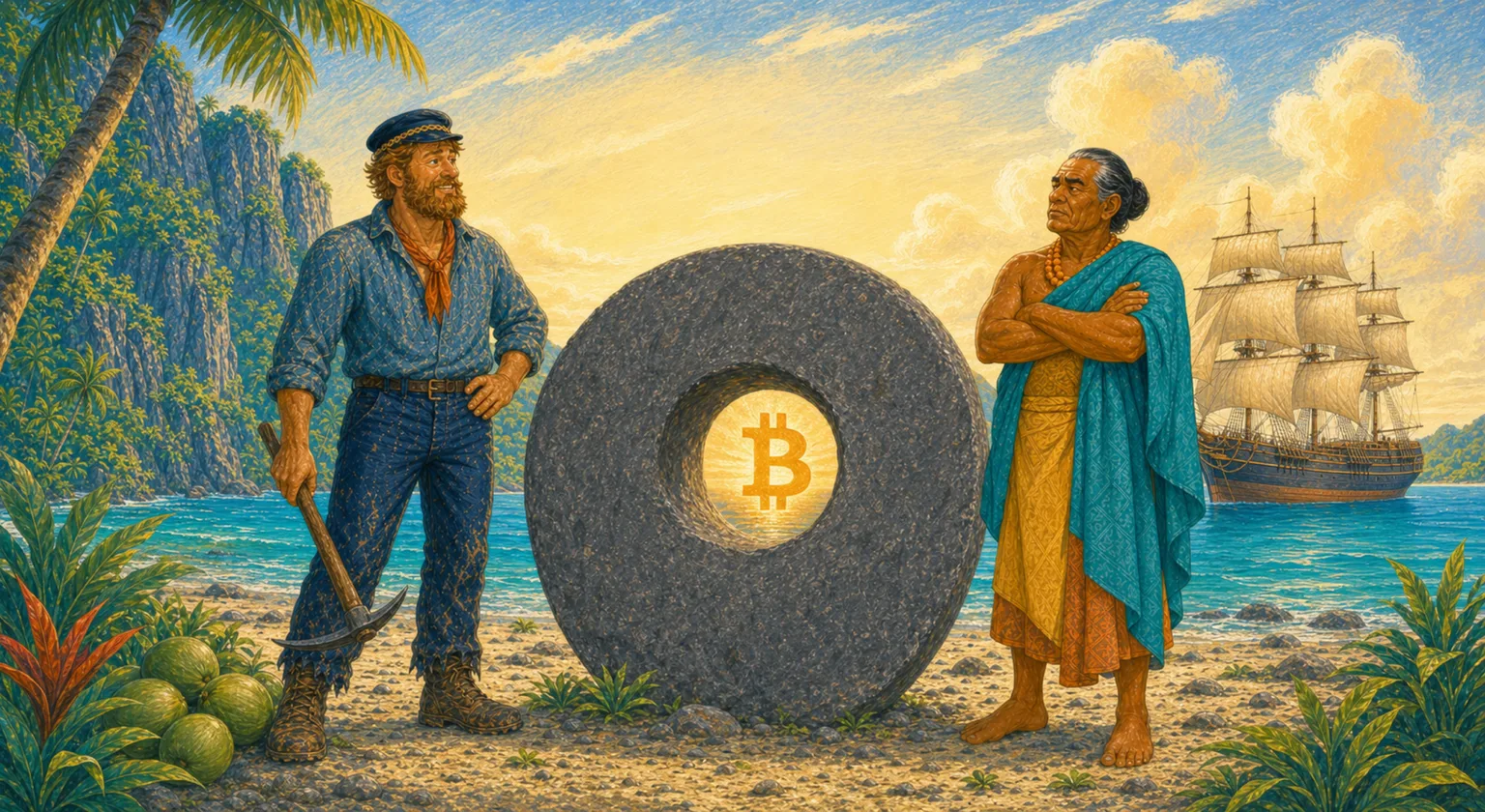
The Captain's Trick
Take a peek — turn the page.
A peek at the beginning · 1 of 3
Love this one?
Gift it to a kid with some real sats attached — they'll read it, pass a tiny quiz, and claim their first bitcoin.
Gift this story